Showing posts with label Scale & Polish. Show all posts

Wednesday, November 14, 2018

How To Stop Tooth Decay

I often get asked how to stop tooth decay. You'd think that keeping your teeth healthy by eating healthily & keeping them clean was about as easy as getting off a chairlift - wrong. This movie clip shows -
1
) that getting off a chairlift isn't that simple

2) How bacteria form plaque on your teeth and

3) how that plaque ultimately leads to dental decay 

Decay & the subsequent hole that develops is actually a symptom of a disease process called caries. You can only have caries when certain acid-loving bacteria are established in large concentrations in the mouth (to date 60+ bacteria have been recognised to contribute to caries, tooth decay & subsequent cavity formation requiring fillings). This acid-loving bacterial colony is called an “unhealthy biofilm”. It is now possible, using medicaments in the form of mouth rinses & tooth gels & mouth sprays, to change the concentrations of these “bad” bacteria thus altering the bacteria living in your mouth to those that thrive in a more healthy neutral or alkaline environment (healthy biofilm). If this happens then the cycle of getting cavities & needing fillings should stop altogether or slow down.


 If you have - 
1) all your cavities restored
2) adequate saliva flow
3) a healthy biofilm (good bacteria) &
4) you don’t encourage bad bacteria to “move back into your mouth” by feeding them food/drinks with refined & unrefined sugars
you should not suffer from caries & therefore should not get cavities.
I have compiled some general information & a prescription along with a treatment regime which will assist you. But first
How Tooth Decay Happens
Tooth Decay is caused by certain types of acid loving bacteria (e.g. mutans streptococci and lactobacilli etc) that live in the mouth. When they attach themselves to the teeth and multiply in dental plaque, they can do damage. The bacteria feed on what you eat, especially sugars (including fruit sugars) and cooked starch (bread, potatoes, rice, pasta, etc). Within about five minutes after you eat or drink, the bacteria begin producing acids as a by-product of their digesting your food. Those acids can penetrate into the hard substance of the tooth and dissolve some of its minerals (calcium and phosphate). If the acid attacks are infrequent and of short duration, your saliva can help to repair the damage by neutralizing the acids and supplying minerals and fluoride that can replace those lost from the tooth. However if you have many of these bacteria, or your saliva is defective; then the tooth mineral lost by the attacks of acid is too great and cannot be repaired. This is the start of tooth decay and leads to cavities. Smaller cavities are fixed with either dental fillings. Larger cavieties can be fixed with either dental fillings or stronger more long lasting dental crowns & overlays

Read how diagnosis of tiny dental cavities are found with the help of laser Diagnodent diagnosis & then treated in a minimally invasive manner using Dental Air Abrasion
 Methods of Controlling Tooth Decay
  • 1.Diet: Reducing the number of sugary and starchy foods, snacks, drinks, or lollies can help reduce the development of tooth decay. That doesn’t mean you can never eat these types of foods, but you should limit their consumption particularly when eating between main meals. A good rule is 3 meals per day and no more than 3 snacks per day. Your last snack/meal of the day should be at least one hour prior to you going to bed.
  • 2. Fluorides: Fluorides help make teeth more resistant to being dissolved by bacterial acids. Fluorides are available from a variety of sources such as drinking water, toothpaste, mouth rinses, and products prescribed by your dentist such as brush on gels used at home or gels and foams applied in the dental surgery. Daily use is very important to help protect against the acid attacks.
  • 3. Plaque Removal: The most important thing that you can do at home is to clean your teeth at least twice daily for 2 minutes. The purpose of cleaning the teeth is to reduce the overall level of bacteria in your mouth as well as clean the biting surfaces and the sides of the teeth facing the tongue and cheeks. Brushing is also effective in reversing and preventing gingivitis, but in order to control and prevent tooth decay, you must use a toothpaste containing fluoride. However in order to clean between the teeth other oral hygiene aids must be used daily. E.g. Floss, interproximal brushes. Having a professional dental clean with one of our dentists or dental hygienist is a great way of removing dental plaque, dental calculus & scale that you may have missed
  • 4. Saliva: Saliva is critical for controlling tooth decay. It neutralizes tooth decay acids and provides minerals and proteins that protect the teeth. If you cannot brush after a meal or snack, you can chew some sugar free gum. This will stimulate the flow of saliva to help neutralize the acids and bring lost minerals back to the teeth. (Sugar free candy and mints could also be used, but some of these contain acids themselves. These acids will not cause tooth decay, but they can slowly dissolve the enamel surface over time (a process called erosion)). Some sugar free gums are designed to help fight tooth decay and are particularly useful if you have a dry mouth (many medications can cause dry mouth). Some gums contain baking soda, which neutralizes the acids produced by the bacteria in plaque.
  • Gum that contains xylitol as its first ingredient is the gum of choice. e.g.: Recaldent; Xtra professional or Xtra for kids
  • If you have a dry mouth, you could also fill a drinking bottle with water and add 2 teaspoons of baking soda for each 8 ounces of water and swish with it frequently throughout the day. We also have Carifree boost oral spray (small spray bottles premixed to lubricate dry mouth & keep the oral PH around neutral) Toothpastes containing baking soda are also available from several companies.
  • 5. Antibacterial mouth rinses: Carifree treatment & maintenance rinse to reduce the number of bad bacteria that cause tooth decay & encourage a healthy more neutral/alkaline biofilm.
  • 6. Preventative resin restorations are plastic coatings bonded to the biting surfaces of back teeth to protect the deep grooves from decay. In some people, the grooves on the surfaces of the teeth are too narrow and deep to clean with a toothbrush, so they may decay in spite of your best efforts thus creating “reservoirs” of bad bacteria that subsequently seed the rest of your mouth causing cavities elsewhere. Sealants are an excellent preventative measure for children and young adults at risk.
Medicaments available in the form of mouth rinses, tooth gels, fluoride applications & mouth sprays are all available at Milford Dentists, North Shore Auckland.

General Prescription

  • 1) Floss daily
  • 2) Brush twice daily with fluoride toothpaste
  • 3) Limit sugary snacks and drinks between meals
  • 4) Chew xylitol chewing gum (Recaldent; xtra professional or xtra for kids) after meals or snacking when you cannot brush.
  • 5) Drink more water
  • 6) Have regular dental cleaning with your dental Hygienist or Dentist
  • 7) Use a dental water pick
Please ask us which dental products are suitable to help improve the health of your mouth. 
posted by Andrea
Milford Dentists is proud to help the good people of the North Shore with all their dental requirements; especially in our mission to help you iradicate dental tooth decay - From Devonport and Belmont up through Takapuna, Castor Bay,Mairangi Bay & Browns Bay as well as Albany, Northcote, Hillcrest & the Whangaporoa Peninsula give us a call - 09 4896575.

Dental Hygienist - Masked Hygienist


Many of you visit a Dental Hygienist or Dentist for anything from routine teeth cleaning to advanced Gum Disease Treatment. As well as making your mouth feel great after a scale & polish or more complex root planing therapy, there are proven benifits that impact on your overall health regarding cardiovascular disease susceptibility. People with gum infection have large quantities of pathogenic bacteria sitting right next to inflamed gum tissue. When you chomp together these bacteria are knocked into your blood stream. These bacteria dramatically increase your risk of suffering cardiovascular disease, Subacute bacterial endocarditis & infection of newly placed prosthetic joints like hip replacements. Before you watch the second youtube clip you might want to cheer yourself up by watching our cartoon strip animation - "The Masked Hygienist - Return of the Killer Cereal"

OK back to the serious stuff. This next film clips should give you an idea of the mechanism of gum infection & how it impacts on your ateries & veins & heart. Also read about "What is gum infection" here

We are here to help & here are some options 
Our Dental Hygienist Karen is able to assist with routine procedures like a scale & polish or root planing as do our Dentists Tristan, Geoff & Andrea. Sometimes broken teeth, a broken filling or a broken dental crown can cause food impaction leading to periodontitis / gum infection. Simple fixes like placing a white composite resin bonded filling or a porcelain or gold dental crown or porcelain overlay to close the contacts between the tooth are all that is required.
Regarding our newest team member - we are very excited to welcome Tristan. As well as routine dentistry Tristan brings a very specific skill set regarding the treatment of Periodontal / Gum Disease. After acquiring a great deal of surgical experience whilst working in a UK hospital Maxillofacial department and gaining his membership to the Faculty of Dental Surgery from the Royal College of Surgeons, England, Tristan has furthered his post graduate training with a Diploma in Restorative Dentistry (RCS Eng) & is 2 years into a three year MSc in Clinical Restorative Dentistry with a specific interst in Periodontology. This means he is able to provide treatment above & beyond that of a most general dentists like me (Andrea).
Tristan Barker BDS MFDS RCS(Eng) Dip. Rest. Dent. RCS(Eng) writes - "With regards to periodontal disease & its treatment, I am happy to perform non-surgical and surgical periodontal therapy. Also I am happy to perform periodontal regeneration in infra bony defects with Emdogain, and also root surface coverage with coronally advanced flaps and emdogain +/- alloderm regenerative tissue matrix" ................. Translated into English this means he is a very safe pair of hands.
Tristan enjoys all aspects of general dentistry. He aims to provide his patients with the optimal experience in what is often an extensive and lengthy process. His ethos is of a relaxed but comprehensive attitude in providing the best possible care in a comfortable environment. 
Back to the reason for this blog as I've started waffling .......... Well the good news is that, if the gum disease is detected at its early stages, it can be treated and reversed, so an option is to get an idea of how healthy your gums are & take things from there. We can help with this.
Posted by Andrea
Milford Dentists is proud to help the good people of the North Shore with all their dental requirements; especially in our mission to help you iradicate gum infection / periodontitis - From Devonport and Belmont up through Takapuna, Castor Bay,Mairangi Bay & Browns Bay as well as Albany, Northcote, Hillcrest, the Whangaporoa Peninsula and beyond give us a call - 09 4896575

Get Teeth Cleaner Than you Ever Thought Possible


Find out how to remove stain on teeth & get teeth cleaner than ever at Milford Dentists with our Perio-Air Flow and our Dental Hygienist.
As well as offering all forms of dental hygiene treatments such as a scale & polish with our Dental Hygienist Karen or more complex root planning & periodontal surgery with Tristan Barker BDS, Milford Dentists now has Perio-Air Flow technology.  Perio-Air Flow is a new technology that gets your teeth cleaner than even we thought was possible. What is Perio-Air Flow Technology and also what are the 5 reasons why you should have your teeth cleaned with Perio-Air Flow 
What is Perio-Air Flow?EMS Perio-Air Flow is a procedure which uses a gentle spray of air, water & either sodium bicarbonate or glycine powder through a tiny nozzle to remove surface stains, plaque and other soft deposits such as food particles trapped in between the teeth.
5 Reasons why you should have your teeth cleaned with Perio-Air Flow Technology. 
Perio-Air Flow -
1) Removes dental plaque which helps to preventing Gingivitis and Periodontal disease - Read our blog on  What is Gum Disease"
2) Helps to maintain heathy gum tissue around Dental Implants
3) Cleans the grooves in your teeth( fissures) ready for fissure sealing
4) Cleans well around braces
5) Removes dental plaque from under the gum.
The literature overwhelmingly supports the use of an air polishing device as an efficient and effective means of 
removing stain and plaque from tooth surfaces in conjunction with routine dental scaling with our Dental Hygienist. In short, air polishing is believed to be the least damaging and most efficient means of removing stain on enamel.

Before & after with Scaling & then Perio-Air Flow.
Watch the movie clip below to see how Plaque Biofilm builds up over 8 hours 

Milford Dentists is proud to help the good people of the North Shore with all their dental requirements; especially in our mission to help you iradicate gum infection / periodontitis - From Devonport and Belmont up through Takapuna, Castor Bay,Mairangi Bay & Browns Bay as well as Albany, Northcote, Hillcrest, the Whangaporoa Peninsula and beyond give us a call - 09 4896575.

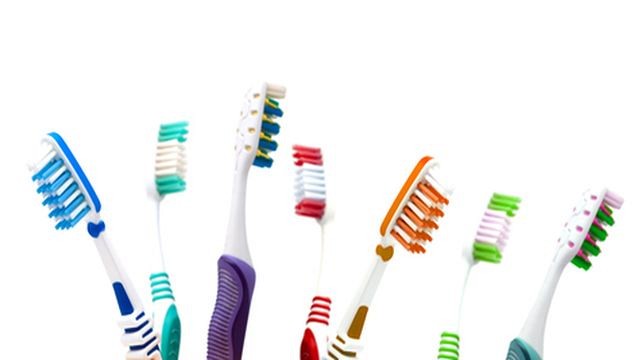
What Toothbrush Is Best


What Kind Of Tooth Brush Should I Use? - Soft, Medium Or Hard Or Electric?

Before working in the dental world I used to think the harder the brush the better the clean. Hard bristles scrubbing your teeth clean. Well I was so wrong. Did you know that if you use a hard or medium bristle brush you can damage your gums by traumatising them & pushing them up the teeth? 

Have you heard of the old wives tail, “as you get older you get long in the tooth”. This is not really true, people’s teeth look longer due to their gums receding either from periodontal/gum disease or brushing with a hard or medium toothbrush.
It makes sense to think that a hard bristled brush would be effective at cleaning your teeth however if you clean your teeth too vigorously you can damage tooth structure and gum tissue. A soft bristled brush will gently remove plaque because the bristles splay into all the nooks and crannies whereas a hard bristled tooth brush can irritate the gum and push the gum away from the tooth. 

One of the jobs of the gum is to protect the root surface so correct brushing technique is essential but if the gums recede from hard brushing, the root is exposed making you more at risk of dental decay and tooth sensitivity.

So the big debate, electric or manual?

Well electric definitely has its place. An electric tooth brush can benefit someone who has manual dexterity problems like Arthritis, carpal tunnel syndrome and Parkinson’s. Most good electric tooth brushes have a timer which helps the user to know when 2 minutes is complete, which would help ensure a proper clean to maintain good oral health.
It can be hard to get children to brush their teeth however if you use a kids electric tooth brush with a picture on the handle  and tell them the brush tickles this can make it more fun and encourage them to want to brush their teeth twice a day for 2 minutes.
Manual toothbrushes come in many shapes and sizes and are a lot cheaper than an electric brush. A plain soft bristled toothbrush with a small head will do the job. You can do just as good a job with a manual as you can with and electric tooth brush but you do have to put the time and effort in. Manual tooth brushes are a little easier to travel with because you don’t need to make sure it is charged or bring a charger.
Whether you choose an electric or manual brush make sure to change your brush every season, around every 3 months or when the toothbrush bristles have splayed. Whichever brush you choose just remember it is the brushing twice a day and flossing that counts to maintaining good oral health.
At Milford Dentists Karen Hobbs, our Dental Hygienist/Therapist & our three dentists, Andrea Clarke,Tristan Barker & Geoff Moulder are here to assess & help with all aspects of oral health care & gum treatments, from simple scaling and polishing to complex periodontal problems
Posted by Karen
Milford Dentists is proud to help the good people of the North Shore with all their dental requirements; especially in our mission to assess your gums and help you iradicate gum infection / periodontitis - From Devonport and Belmont up through Takapuna, Castor Bay,Mairangi Bay & Browns Bay as well as Albany, Northcote, Hillcrest, the Whangaporoa Peninsula and beyond give us a call - 09 4896575.

Periodontal (Gum) Disease: Causes, Symptoms, and Treatments

A beautiful smile begins with a strong foundation of healthy gums. Early detection and treatment of periodontal disease can help most people to preserve their teeth for a lifetime.  Milford Dentists offers a comprehensive periodontal disease prevention and treatment program because a solid foundation of healthy gums is essential in protecting not just your teeth but also dental treatments such as Dental Implants, Dental Crowns, Dental Bridges, Tooth Veneers, and Professional Tooth Whitening. 3 Things you should know about Periodontal (gum) infection are -

1)  Gingivitis
Gingivitis is the early stage of periodontal disease, when only the soft tissues of the mouth are affected. Plaque build-up leads to tartar and bacteria below the gum-line, which leads to inflamed, irritated, or bleeding gums. The good news is that gingivitis is reversible.​​​ A thorough professional cleaning by a dental Hygienist, followed by regular brushing, flossing, and check-ups, restores gums to good health by removing plaque and bacteria.

2) Periodontitis
Periodontitis is marked by the breakdown of structures that surround, secure, and the support the teeth. These structures include the bone, gums, and fibres which anchor the teeth to the bone. Periodontal disease is the number one cause of tooth loss in adults.  Since periodontitis often exhibits no visible symptoms and may not cause physical pain until much later, it is important that the disease is detected at an early stage and treated immediately. In fact, an average of 4 out of 5 of those affected report no symptoms.
Dentists & Dental Hygienists can stabilise, and in some instances regenerate lost bone and tissue, reversing some of the damage caused by periodontitis.  Eliminating existing bacteria and regenerating bone and tissue helps to reduce the deep moat or pocket that occurs where the gum meets the tooth thus repairing damage caused by the progression of periodontal disease. With a combination of daily oral hygiene and professional maintenance care, you'll increase the chances of keeping your natural teeth – and decrease the chances of other health problems associated with periodontal disease – for instance did you know there is a direct link between periodontal/gum disease and cardiovascular disease  
3) Prevention is better than a cure.One of the easiest ways to prevent the decline of your oral health is to maintain a regular schedule of having your teeth cleaned a Dental Hygienist and using good oral hygiene techniques at home – brushing – flossing – using a recommended mouthwash – using a waterpik. Should you already suffer from Periodontal (Gum) Disease, seeing a Dentist for more complex gum treatment is an option. By working together, we can prevent the advance of gum disease and ensure healthy teeth and a healthy smile in the years ahead.

Karen Hobbs our Dental Hygienist/Oral Therapist & Tristan Barker - Dentist, who has a special interest in treating Periodontal disease are here to help at Milford Dentists
Posted by Karen & Tristan
Milford Dentists is proud to help the good people of the North Shore with all their dental requirements; especially in our mission to help you iradicate gum infection / periodontitis - From Devonport and Belmont up through Takapuna, Castor Bay,Mairangi Bay & Browns Bay as well as Albany, Northcote, Hillcrest, the Whangaporoa Peninsula and beyond give us a call - 09 4896575.

Why Use Dental Floss


Why Should I floss? Why does my Hygienist keep telling me to floss daily? Why does my Dental Floss smell bad after I've used it? Many questions to answer & all important to your oral hygiene...
Your toothbrush cleans the outer and top surfaces of your teeth but does not clean in between your teeth. Dental Floss reaches the areas a toothbrush can't reach. If you don’t floss you’re not cleaning food debris & bacterial dental plaque off all the surfaces of your teeth - It’s as simple as that.
If you brush your teeth but do not floss your teeth, you are leaving bacteria in the gaps in between your teeth to multiply and cause gum infection gingivitis which can then lead to periodontal disease and eventually premature tooth loss. Dental Bacteria smell - this is why dental floss smells after flossing - it is coated in dental bugs
When Should I Use Dental Floss?
Here at Milford Dentists (and the American Dental Association ) - we recommend you should be using an inter-dental cleaner (like floss) at least once a day to clean between your teeth - it's an essential part of taking care of your teeth and gums.Cleaning between your teeth can help prevent an unnecessary build up of tartar, cavities and gum disease.
The places where the gums and teeth meet are where flossing plays a significant role. Tiny particles of food can get lodged here. Bacteria that live in the mouth eat this food establishing a complex gloopy colony called Dental Plaque. 
Dental Plaque, which is a bit like cottage cheese in consistency, gets so stuck onto teeth after 24 hours that it cannot be removed with a toothbrush or floss. This video below shows how a colony of Dental Plaque builds up into a sophisticated bacterial city over an 8 hour period!
Dental Plaque then hardens and fuses to the tooth over time to form tartar/calculus, a thick deposit that only the hygienist or dentist can remove with a scraper. Tartar build-up can lead to gingivitis: red, swollen gums that are the first stage of gum disease. 

It is also a cause of Bad Breath. If left unchecked, the bacteria-laden tartar and plaque can spread even deeper below the gum line, causing periodontitis:  gum disease characterised by severe inflammation. The bone & gum that supports a tooth is eventually destroyed leading to the tooth becoming wobbly & falling out. 

There is also a direct link between gum infection and Cardiovascular Disease - This video explains how this bacterial infection affects gums & the heart, arteries & veins.
Read our blog "What Is Gum Disease" for more info
Think of a toothbrush and dental floss as a paint roller and fine paintbrush, respectively. You could paint your living room walls with just one of the tools, but using them together will provide a much more effective result with a finish that completes all the areas.
So to summarise – Keeping your teeth & gums healthy is all about mechanically removing bacteria & food from them. Do this perfectly every day & you will have healthy gums for life.

At Milford Dentists Karen Hobbs, our Dental Hygienist/Therapist & our three dentists, Andrea Clarke, Tristan Barker & Geoff Moulder are here to assess & help with all aspects of gum treatments, from simple scaling and polishing to complex periodontal problems
If you feel your gum problem is causing Bad Breath Halitosis click here for more information on our Fresh Breath Clinic
Posted by Karen
Milford Dentists is proud to help the good people of the North Shore with all their dental requirements; especially in our mission to assess your gums and help you eradicate gum infection/periodontitis - From Devonport and Belmont up through Takapuna, Castor Bay, Mairangi Bay & Browns Bay as well as Albany, Northcote, Hillcrest, the Whangaporoa Peninsula and beyond give us a call - 09 4896575.

The Benefits Of Scale And Polish


Here’s why if you want to drastically improve the look of your smile and your overall oral health you should consider a scale and polish. It is quick and safe and will give you impressive results.

Be sure to make regular visits to your dental hygienist to keep your teeth and mouth healthy and clean. Going to the hygienist should be part of a regular oral care routine. 

Don't wait until you have a dental issue - make your appointments regularly to prevent issues before they arrive. Booking an appointment with a hygienist is easier than ever because you can book them directly with the hygienist instead of having to see a dentist first.

A scale and polish is a cleaning process where the hygienist removes any staining and build-up from your teeth. Tartar build-up can be felt on the backs of your teeth. It will be scaled away and then the teeth will have their surface polished.

SCALE & POLISH - THE BENEFITS OF A MORE EFFECTIVE CLEAN
Stain Removal - The things that we eat and drink can cause staining of the teeth. Things like tobacco, tea, coffee, and red wine amongst other things cause stains, but a scale and polish can quickly and effectively remove this type of superficial staining and is recommended for most people every 6 months. You will enjoy a clean and bright smile after the procedure. 

You can also expect other benefits from having a scale and polish…

Plaque Removal - Proteins in saliva are constantly at work to produce plaque on your teeth. Even if you have just brushed your teeth your mouth will begin to create plaque. If the plaque is not removed it begins to harden forming Calculus. Once plaque turns into tartar it becomes very difficult to remove by simply brushing. The most common areas in which tartar build-up occurs is in between teeth and hard to reach places between teeth and gums. If you are not able to reach these difficult areas regularly, tartar build-up will begin.

Reduce Instances Of Gum Recession, Tooth Decay, And Bleeding Gums - You can prevent gum bleeding and gum recession and destruction of the bone around teeth which leads to wobbly teeth and eventual loss of teeth by maintaining a gum infection free mouth. You can also significantly reduce the risk of tooth decay by having plaque removed. 

Fresh Breath - A scale and polish will help to reduce bad breath by removing build-up. If you are worried you or a loved one may have a bad breath problem see our Fresh Breath Clinic Page

A Beautiful Smile
 - A scale and polish will give you a beautiful smile and increase your confidence.

Our Dental Hygienist Karen is able to assist with routine procedures like a scale & polish or root planing as do our Dentists Tristan, Geoff, & Andrea. Still unsure? Need to know more? Not a regular client? ,Matt

Contact Milford Dentists obligation free - (09) 489 6575