Showing posts with label 2015. Show all posts

Wednesday, November 14, 2018

What Toothbrush Is Best


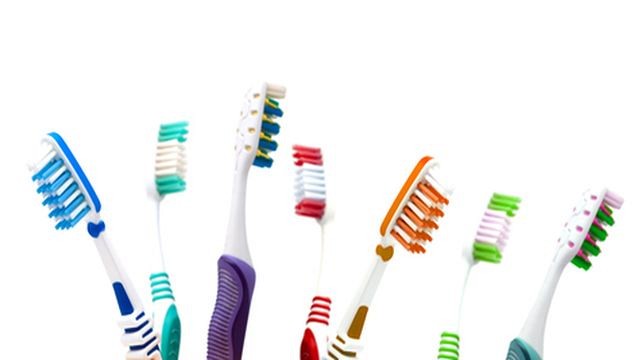
What Kind Of Tooth Brush Should I Use? - Soft, Medium Or Hard Or Electric?

Before working in the dental world I used to think the harder the brush the better the clean. Hard bristles scrubbing your teeth clean. Well I was so wrong. Did you know that if you use a hard or medium bristle brush you can damage your gums by traumatising them & pushing them up the teeth? 

Have you heard of the old wives tail, “as you get older you get long in the tooth”. This is not really true, people’s teeth look longer due to their gums receding either from periodontal/gum disease or brushing with a hard or medium toothbrush.
It makes sense to think that a hard bristled brush would be effective at cleaning your teeth however if you clean your teeth too vigorously you can damage tooth structure and gum tissue. A soft bristled brush will gently remove plaque because the bristles splay into all the nooks and crannies whereas a hard bristled tooth brush can irritate the gum and push the gum away from the tooth. 

One of the jobs of the gum is to protect the root surface so correct brushing technique is essential but if the gums recede from hard brushing, the root is exposed making you more at risk of dental decay and tooth sensitivity.

So the big debate, electric or manual?

Well electric definitely has its place. An electric tooth brush can benefit someone who has manual dexterity problems like Arthritis, carpal tunnel syndrome and Parkinson’s. Most good electric tooth brushes have a timer which helps the user to know when 2 minutes is complete, which would help ensure a proper clean to maintain good oral health.
It can be hard to get children to brush their teeth however if you use a kids electric tooth brush with a picture on the handle  and tell them the brush tickles this can make it more fun and encourage them to want to brush their teeth twice a day for 2 minutes.
Manual toothbrushes come in many shapes and sizes and are a lot cheaper than an electric brush. A plain soft bristled toothbrush with a small head will do the job. You can do just as good a job with a manual as you can with and electric tooth brush but you do have to put the time and effort in. Manual tooth brushes are a little easier to travel with because you don’t need to make sure it is charged or bring a charger.
Whether you choose an electric or manual brush make sure to change your brush every season, around every 3 months or when the toothbrush bristles have splayed. Whichever brush you choose just remember it is the brushing twice a day and flossing that counts to maintaining good oral health.
At Milford Dentists Karen Hobbs, our Dental Hygienist/Therapist & our three dentists, Andrea Clarke,Tristan Barker & Geoff Moulder are here to assess & help with all aspects of oral health care & gum treatments, from simple scaling and polishing to complex periodontal problems
Posted by Karen
Milford Dentists is proud to help the good people of the North Shore with all their dental requirements; especially in our mission to assess your gums and help you iradicate gum infection / periodontitis - From Devonport and Belmont up through Takapuna, Castor Bay,Mairangi Bay & Browns Bay as well as Albany, Northcote, Hillcrest, the Whangaporoa Peninsula and beyond give us a call - 09 4896575.

What Can I Do About White Spots On My Teeth?

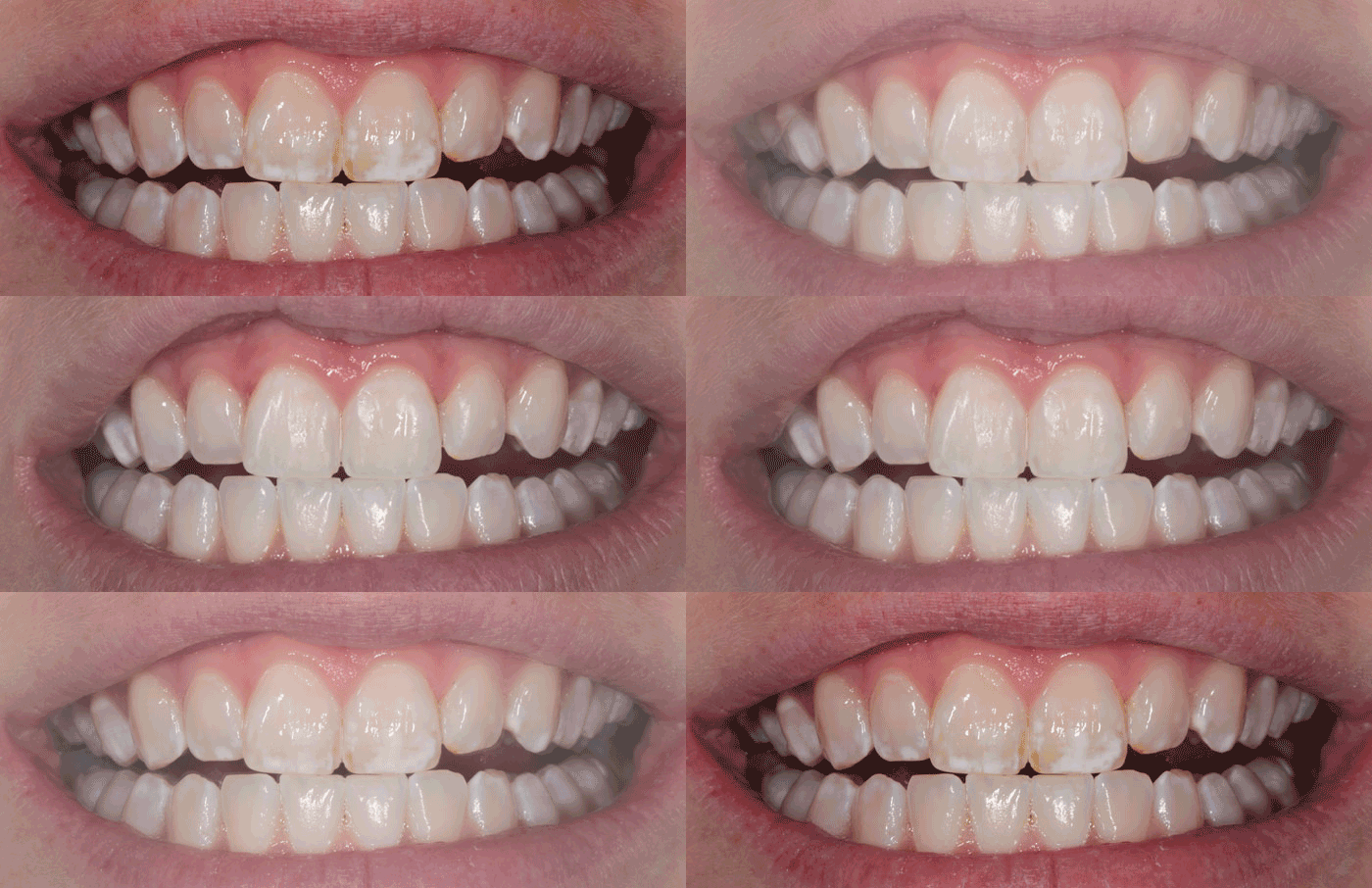
If you’ve ever wondered “how do I get rid of white or brown spots on teeth or what can I do about white or brown spots on my teeth" then read on. These white or brown opaque areas on teeth can’t simply be polished away during a routine scale and polish at the dental hygienists or dentists. Could Enamel Microabrasion of these areas work for you?


Do you have brown, yellow or white marks on your front teeth? Have you ever wondered if this can be fixed? Enamel Microbrasion slurry is a chemical-abrasive paste which can be used to safely correct superficial brown, white or multi-coloured enamel staining when done in combination with “at home” tooth whitening. Karen Hobbs our Oral Therapist and Dental Hygienist has had excellent success with this process. She writes “I started doing the procedure on some of my patient who had concerns about the marks on their front teeth, they were uncomfortable about smiling because people would make a comment about the marks on their teeth. Since the procedure they have been so happy with the result and couldn’t believe that they hadn’t done something about it sooner. Here are a few cases that were a great success”
                                          
What does the procedure involve? Karen goes on to explain
  1. “At the first appointment I take some impressions of your mouth for the at home whitening procedure.
  2. Several days later we get you back and take some before photos to monitor the changes to your teeth. At this appointment we start treating the spots as well. We put on a barrier to protect your gums. Once this is on I apply a slurry of acid abrasive paste onto the teeth with the marks. I apply this for 60 seconds using a dental polishing brush. This paste safely removes most marks. At this same appointment I check the home whitening trays fit well and go through the directions for use at home. By using the at home whitening for 2 weeks directly after the microbrasion technique, the remaining marks are generally removed and along with lightening the teeth we generally achieve a most pleasing end result.
  3. After the 2 weeks of teeth whitening we get you back in for a quick review and take an after picture. To compare – here a couple of before & after cases”

Karen goes onto to note that the microbrasion procedure is painless. However whilst doing the at home whitening you may experience some sensitivity.
If you are interested in having Dental Microabrasion because you have white or brown spots on your teeth give Milford Dentists a call & book in with Karen for an assessment. We can also help with Cosmetic Dentistry in general with Porcelain Veneers, Dental Crowns & white fillings
We also have the amazing EMS Perio-Air Flow which is fantastic for tooth stain removal – read our blog - Get Teeth Cleaner Than you Ever Thought Possible
Milford Dentists is proud to help the good people of the North Shore with all their dental requirements; especially in our mission to help give you a beautiful white healthy smile - From Devonport and Belmont up through Takapuna, Castor Bay,Mairangi Bay & Browns Bay as well as Albany, Northcote, Hillcrest, the Whangaporoa Peninsula and beyond give us a call - 09 4896575.

How Is A Dental Implant Put In


How is a dental implant placed or "put in"?Before any implants are placed, it is important for your dentist to assess the health of your teeth and gums. If there are any signs of gum disease or decay, these must first be treated. Thereafter, your Dental Implant placement treatment will be planned following several x-rays and, in some cases, a CT scan to assess that bone quality and check for nearby anatomical structures to avoid before dental Implant Placement. So how is the Dental Implant put in? The procedure is usually carried out under local anesthesia; IV Sedation is sometimes used if it is a long procedure or the patient is very anxious. 
The gum where the implant is to be placed is "nicked" and lifted and a small hole is prepared in the jawbone at the precise location of the intended implant. The titanium implant is tightly fitted into this socket and the gum is stitched back over the implant. If there is insufficient bone material to accommodate the implant, a bone graft may be required, or the dentist may use smaller-sized mini implants if suitable.
Once the implant has been placed, it is left to heal and integrate with the jawbone for between six weeks to six months. The bone tissue will grow and anchor itself into the microscopic rough surface of the implant.
During this “healing period”, patients are given temporary teeth (bridges) or continue to wear dentures. It is important that temporary teeth do not exert any force on the healing implant. After the healing period, the gum is again lifted and a post is attached to the implant with a temporary crown. Four to six weeks later, when the surrounding gum tissue has matured, the final permanent restoration can be fitted to the implant.
For more info on Dental Implants or alternatives to implants see our page on Missing teeth for all the options if you have missing teeth & our blogs - "What is gum disease" and "Cost of Dental Implant"
Posted by Tristan
Milford Dentists is proud to help the good people of the North Shore with all their dental requirements; especially in our mission to help you with missing teeth - From Devonport and Belmont up through Takapuna, Castor Bay,Mairangi Bay & Browns Bay as well as Albany, Northcote, Hillcrest, the Whangaporoa Peninsula and beyond give us a call - 09 4896575.
Periodontal (Gum) Disease: Causes, Symptoms, and Treatments

A beautiful smile begins with a strong foundation of healthy gums. Early detection and treatment of periodontal disease can help most people to preserve their teeth for a lifetime.  Milford Dentists offers a comprehensive periodontal disease prevention and treatment program because a solid foundation of healthy gums is essential in protecting not just your teeth but also dental treatments such as Dental Implants, Dental Crowns, Dental Bridges, Tooth Veneers, and Professional Tooth Whitening. 3 Things you should know about Periodontal (gum) infection are -

1)  Gingivitis
Gingivitis is the early stage of periodontal disease, when only the soft tissues of the mouth are affected. Plaque build-up leads to tartar and bacteria below the gum-line, which leads to inflamed, irritated, or bleeding gums. The good news is that gingivitis is reversible.​​​ A thorough professional cleaning by a dental Hygienist, followed by regular brushing, flossing, and check-ups, restores gums to good health by removing plaque and bacteria.

2) Periodontitis
Periodontitis is marked by the breakdown of structures that surround, secure, and the support the teeth. These structures include the bone, gums, and fibres which anchor the teeth to the bone. Periodontal disease is the number one cause of tooth loss in adults.  Since periodontitis often exhibits no visible symptoms and may not cause physical pain until much later, it is important that the disease is detected at an early stage and treated immediately. In fact, an average of 4 out of 5 of those affected report no symptoms.
Dentists & Dental Hygienists can stabilise, and in some instances regenerate lost bone and tissue, reversing some of the damage caused by periodontitis.  Eliminating existing bacteria and regenerating bone and tissue helps to reduce the deep moat or pocket that occurs where the gum meets the tooth thus repairing damage caused by the progression of periodontal disease. With a combination of daily oral hygiene and professional maintenance care, you'll increase the chances of keeping your natural teeth – and decrease the chances of other health problems associated with periodontal disease – for instance did you know there is a direct link between periodontal/gum disease and cardiovascular disease  
3) Prevention is better than a cure.One of the easiest ways to prevent the decline of your oral health is to maintain a regular schedule of having your teeth cleaned a Dental Hygienist and using good oral hygiene techniques at home – brushing – flossing – using a recommended mouthwash – using a waterpik. Should you already suffer from Periodontal (Gum) Disease, seeing a Dentist for more complex gum treatment is an option. By working together, we can prevent the advance of gum disease and ensure healthy teeth and a healthy smile in the years ahead.

Karen Hobbs our Dental Hygienist/Oral Therapist & Tristan Barker - Dentist, who has a special interest in treating Periodontal disease are here to help at Milford Dentists
Posted by Karen & Tristan
Milford Dentists is proud to help the good people of the North Shore with all their dental requirements; especially in our mission to help you iradicate gum infection / periodontitis - From Devonport and Belmont up through Takapuna, Castor Bay,Mairangi Bay & Browns Bay as well as Albany, Northcote, Hillcrest, the Whangaporoa Peninsula and beyond give us a call - 09 4896575.

7 Reasons Why Fastbraces Might Work For You

Fastbraces® Highlights
  1. FAST – treatment time that is measured in months instead of years!
  2. EASY – retainers for only 15-20 minutes a day
  3. SAFE –  Tested by leading Universities in the U.S., Europe, and South America
  4. QUALITY – The original, certified by the Inventor and made in the U.S.
  5. SIMPLE – Almost always Non-Extraction treatment
  6. CLEAN – possibly less decay around brackets due to short treatment duration
  7. CLEAR – aesthetic ceramic brackets available with a tooth colored wire
Technology that creates beautiful smiles in a Fast and Safe manner 
Fastbraces® are designed to straighten teeth in a short time period of 3 months to about a year! The teeth are moved differently and safely, creating a beautiful smile that you have always dreamed of!
How it Works
Fastbraces® Technology was developed with safety in mind allowing the system to be fast and affordable without compromising patient care. Fastbraces® Technology uses a unique, patented bracket design that is triangular shaped. The triangular shaped bracket allows for the use of just one wire. Now, patients can get a beautiful, straight smile in as little as a few months. Some patients see results in just a few weeks!

The Research

Fastbraces® Technology has shown optimal performance in the following areas:
  1. Low frictional forces. 
  2. Pain reduction statistically.
  3. Less root resorption statistically. 
Read more about Fastbraces® Technology by clicking Fastbraces® Orthodontics , Q and A Orthodontics And Fastbraces Why, How Long, Does It Hurt? & see examples of before and after Fastbraces® cases in our gallery 
Posted by Andrea & Karen
Milford Dentists is proud to help the good people of the North Shore with all their dental requirements; especially in our mission to help you with your orthodontic needs - From Devonport and Belmont up through Takapuna, Castor Bay,Mairangi Bay & Browns Bay as well as Albany, Northcote, Hillcrest, the Whangaporoa Peninsula and beyond give us a call - 09 4896575.

What Are The Benefits Of Dental Implants Over Other Treatments?


7 Reasons Why A Dental Implant May Be A Good Option For You

What are the advantages of dental implants over dentures and bridges?
  1. A dental Implant is pretty much the next best thing to replace a missing tooth - Once dental implants are fully integrated into your jaw; they function just as well as your own natural teeth: you can eat the foods you want and speak with complete confidence.

    With dentures, eating hard foods such as an apple can be a problem: either the dentures come loose or patients cannot withstand the hard biting forces as this pressure causes pain as the denture pushes into the gum. Irritation and inflammation of the gums is a common problem amongst denture patients.
  2. Dental Implants protect and keep your jaw bone healthy and as a result keep your face looking younger - Normally, the bone tissue surrounding the root of your tooth is maintained by your body’s natural renewal process. 

    However, if you lose a tooth, you will be left with a hole where your tooth root used to be and the bone around this area will slowly begin to disappear (atrophy) which may change the shape of your jaw. 

    A dental implant placed in this space is the only restorative option that can actually stimulate bone growth and production, preventing loss of valuable bone structure. In some patients where bone loss has already occurred over time, bone augmentation may be required before placing a dental implant. Bone loss is a problem for people who have dentures, and as the shape of the jaw slowly changes, the dentures need to be adjusted or re-made to fit the new shape of the jaw. This bone loss can also make a person look older, as the mouth can sag in this area.
  3. Dental implants allow you to keep your teeth where they belong – in your mouth. Unlike dentures that should be left out of your mouth for eight hours a day and might slip or fall out, Dental Implants are firmly & permanently attached in your mouth. Think about a picture hanging on a picture hook or Jandles/flip flops = dentures  versus a picture that is bolted to the wall or laced up boots = dental Implants.
  4. Improved dental hygiene - Unlike Dental Bridges and dentures, which require special cleaning instructions and extra attention, dental implants just need regular brushing, flossing and hygiene appointments, just like your natural teeth.
  5. No need to drill or remove any healthy tooth structure - When replacing missing teeth with dental bridges, the teeth adjacent to the gap need to be prepared and healthy tooth structure is removed to accommodate a crown or bridge abutment to fit over the top of the tooth.

    In the future, if one of the supporting teeth is damaged, the entire bridge restoration will also be compromised, whereas with an implant, the restoration is independent of any of your other teeth. By replacing lost teeth with Dental Implants, no support is required of the adjacent teeth, and your natural teeth do not need to be prepared or altered in any way.
  6. Dental Implants just look better - If placed correctly, a Dental Implant should blend beautifully with your surrounding natural teeth.
  7. Dental Implants are a very predictable way of replacing missing teeth. Dental implants have a track record of reliable, long-term successful outcomes. They are often considered “more predictable” than other treatments to replace missing teeth, compared to Dentures & Dental Bridges
NB Dentures can be supported by implants, which will greatly improve function, enabling patients to eat the foods they want with complete confidence and not having to worry about bone loss and loose dentures falling out. Check out our Dental Implant before and after pictures of completed cases on our  Denture Gallery Page
Posted by Andrea and Tristan 
Milford Dentists is proud to help the good people of the North Shore with all their dental requirements; especially in our mission to help you with missing teeth - From Devonport and Belmont up through Takapuna, Castor Bay,Mairangi Bay & Browns Bay as well as Albany, Northcote, Hillcrest, the Whangaporoa Peninsula and beyond give us a call - 09 4896575.

Q and A Orthodontics And Fastbraces Why, How Long, Does It Hurt?


1. What is Fastbraces®?  Fastbraces® were developed to straighten teeth differently. Fastbraces® is the revolutionary system of fast, safe, easy and affordable braces that is changing the field of orthodontics.  It is a complete, non-extraction system for most cases, which provides patients with outstanding results. 
2. How does it work? Traditional braces move teeth into position in two stages, usually over a period of about two years. In the first year, the crown of the tooth is moved into alignment. In the second year, treatment addresses the position of the root of the tooth. However, the brackets used with Fastbraces® work on a different mechanical principle altogether.

The patented system uses an innovative triangular bracket and a specially- shaped square wire to correct the position of the root of the tooth, from the beginning of treatment. This combination is key in realigning the root and crown simultaneously.
3. How long is Treatment Time?  Fastbraces® Technology gently allows for movement of the roots of the teeth towards their final position from the onset of treatment, achieving root parallelism at the beginning stages, thus completing treatment from 3 months to about a year. Some patients see results in just weeks!
4. Are Fastbraces® less Painful? University research has shown that Fastbraces® Technology has low mean frictional forces, a clear-cut reduction in sliding friction and pain reduction with fitting front and back teeth together. 
5. Do I have to wear a Retainer? With the complete alignment of the roots of the teeth, retention is needed every day for only 15-20 minutes (“Tooth Shampoo”.) Some people like wearing the retainers at night (“Teeth pajamas”). No more retainers for hours during the day for months after treatment.

This is yet another reason why Fastbraces® Technology is changing the way orthodontics is done altogether. 
6. Milford Dentists is proud to be your premiere dental office to offer the amazing Fastbraces® Technology. Discover how Milford Dentists and Fastbraces® can team up to help you truly LOVE your smile, maybe for the first time ever!
7. Successful Smiles: Since Fastbraces® Technology was first introduced in 1992; there have been great success stories around the world. Both children and adults have seen the benefits of this innovative system. The confidence that is gained from having a healthy, beautiful smile is priceless.

Fastbraces® Technology has been the key to a happier life – both personally and professionally, for thousands of patients around the world. Visit www.fastbraces.com for more amazing stories. 
8. Fastbraces® Treatment Overview
The first step to a great smile is to meet one-on-one with Karen Hobbs to determine if you are a candidate for the Fastbraces® system. Next, impressions and x-rays are taken to help Andrea Clarke create a customized treatment plan designed specifically for your smile. 

Please note that you have to be dentally fit to have orthodontics ie had a checkup and bitewing x-rays within the last six months & have healthy gums. 

How Can You Decide if You’re a Good Candidate for Fastbraces®?

Here are a few simple questions to ask yourself that can help determine whether or not you are a good candidate:
• Would you like a straighter, more beautiful smile?
• Would you like that beautiful smile in a few short months instead of years?
• Would you like to experience less discomfort?
• Would you like to pay less for your orthodontic treatment?
If you answered ‘Yes’ to any of these questions, then CONGRATULATIONS, you could be a great candidate for Fastbraces®!
Read more about Fastbraces® Technology by clicking Fastbraces® Orthodontics , 7 Reasons Why Fastbraces Might Work For You & see examples of before and after Fastbraces® cases in our gallery 
Posted by Andrea & Karen
Milford Dentists is proud to help the good people of the North Shore with all their dental requirements; especially in our mission to help you with your orthodontic needs - From Devonport and Belmont up through Takapuna, Castor Bay,Mairangi Bay & Browns Bay as well as Albany, Northcote, Hillcrest, the Whangaporoa Peninsula and beyond give us a call - 09 4896575.

FastbracesĀ® Logo, Braces for adults and braces for kids
Andrea Clarke, BDS is
a proud Fastbraces® provider:
braces technology that is fast,
safe and affordable.

What Is The Difference Between A Filling And A Crown?

If you have a sore tooth and are looking to get it fixed you might wonder what the difference is between a filling and a crown? Dentists can fill a tooth, or crown a tooth, they can create a filling and mould a crown but they are two very different processes even though they sound quite similar and may seem the same to a layperson.
Dental repair work to fix teeth can really be divided into two main types ‘direct’ and ‘indirect’ restoration work. Direct restoration work includes work like fillings and indirect dental work covers crowns and veneers.
The simplest way to differentiate between the two is that a ‘direct’ restoration is when the dentist repairs a tooth ‘directly’ in the patient’s mouth, by moulding material to ‘fill’ a gap or flaws in the tooth. An ‘indirect’ restoration is when the dentist takes a mould of the tooth either with a quick setting impression material or a digital scan of the tooth and then creates the replacement crown or veneer outside of the mouth before fitting it to the patients tooth.
Sometimes dental terminology is confusing for patients so we’ve broken down all the main terms so consumers have a clearer understanding:
Dental restoration 
Dental restoration is the process of repairing a damaged tooth and essentially restoring its function, integrity or appearance.  Most often the tooth will have been damaged by caries (which is the technical term for a cavity) or external trauma. If the tooth is damaged significantly and difficult to repair a dentist may recommend replacing it with a dental implant  a dental Bridge or a partial denture.
A ‘filling’ or ‘direct’ restoration is when a dentist places a soft material into the damaged tooth and shapes it before it sets hard. This is a convenient process to use if patients want the tooth fixed in a single visit.
‘Filling’ a tooth is also how dentists usually refer to smaller tooth restorations which often just involve repairing a small amount of damage rather than rebuilding a tooth. The more damage there is and the more restoration work needs to be done to restore it, the more likely a crown or veneer will be needed.
When a customer decides they want a damaged tooth strengthened, reshaped or the appearance improved the dentist will very often choose to create a crown or veneer for the tooth or use the ‘indirect’ restoration method. Crowns and veneers are a longer lasting solution for dental repair, replacing more of the tooth and adding more structural integrity. Other terms for ‘indirect’ restorations include inlays, onlays and bridges (which are multiple crowns in a row including a fused false tooth).
Milford Dentists also has a same day cad/cam service that can create crowns, overlays and veneers in a single day if you want a fast permanent high quality solution.
All good dentists should talk you through all your options and the different costs of repairing a damaged tooth. Whether a filling or a crown is most appropriate should be a joint discussion between a patient and the dentist.
But if you want to do a little homework before you go to the dentist check here: 
Cost/benefit
Procedure
Cost
Benefit
White Fillings
$85
Simple, fast
Multi-surface white fillings
Single surface White fillings
From $174
Simple & fast, bonding the tooth together
Larger Fillings
White filling on more than one surface
From $196
Simple & fast, bonding the tooth together
multi-surface rebuild – in front & back teeth (tinting, layering)
From $1279
Look good, strong, more of a long term solution
Generally for front teeth
(tinting, layering)
From $1579
Look great, can mask discoloured tooth & repair & reshape broken or crooked teeth

Posted by Andrea
Milford Dentists is proud to help the good people of the North Shore with all their dental requirements; especially in our mission to help you strengthen & beautify your teeth - From Devonport and Belmont up through Takapuna, Castor Bay,Mairangi Bay & Browns Bay as well as Albany, Northcote, Hillcrest, the Whangaporoa Peninsula and beyond give us a call - 09 4896575.